When a Red Head and a Black Girl Have a Baby
/https://tf-cmsv2-smithsonianmag-media.s3.amazonaws.com/filer/93/c2/93c23aac-9936-44eb-b1e4-90bf0852b8e7/blue-pink-baby-clothes.jpg)
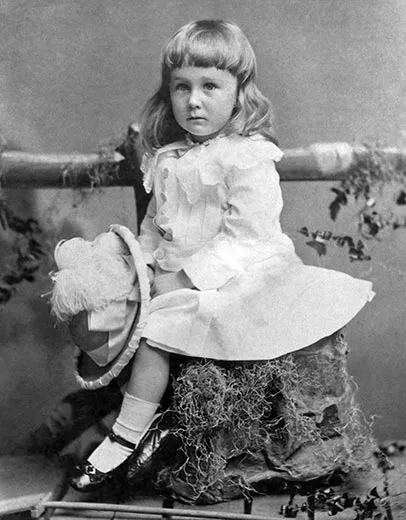
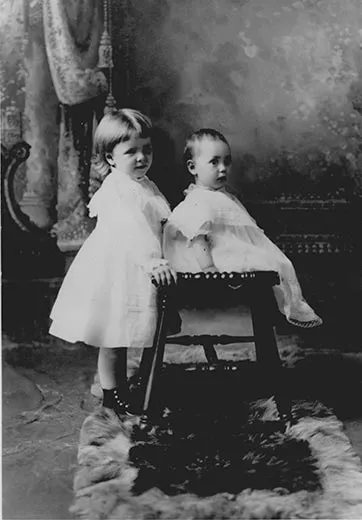
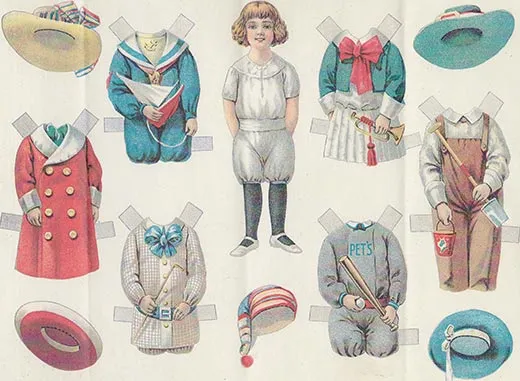
Fiddling Franklin Delano Roosevelt sits primly on a stool, his white skirt spread smoothly over his lap, his easily clasping a hat trimmed with a marabou feather. Shoulder-length pilus and patent leather political party shoes consummate the ensemble.
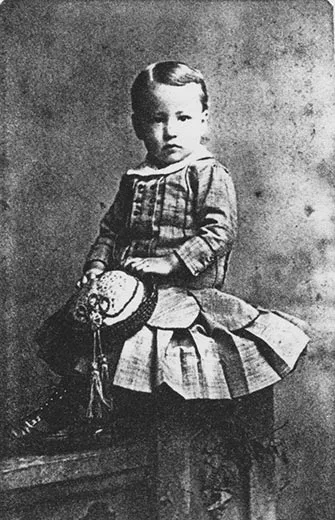
Nosotros find the look unsettling today, even so social convention of 1884, when FDR was photographed at age 2 1/two, dictated that boys wore dresses until historic period half dozen or 7, besides the time of their outset haircut. Franklin's outfit was considered gender-neutral.
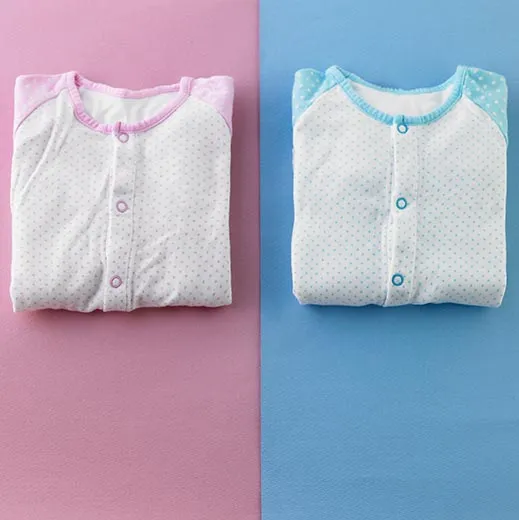
But nowadays people simply have to know the sex of a infant or immature child at beginning glance, says Jo B. Paoletti, a historian at the University of Maryland and writer of Pink and Blue: Telling the Girls From the Boys in America, to exist published later this yr. Thus we see, for example, a pinkish headband encircling the bald head of an babe daughter.
Why have young children'south clothing styles changed and then dramatically? How did nosotros end up with 2 "teams"—boys in blue and girls in pink?
"It'south really a story of what happened to neutral wearable," says Paoletti, who has explored the pregnant of children's clothing for thirty years. For centuries, she says, children wore squeamish white dresses up to age six. "What was once a affair of practicality—you dress your baby in white dresses and diapers; white cotton wool can exist bleached—became a matter of 'Oh my God, if I dress my babe in the wrong thing, they'll abound up perverted,' " Paoletti says.
The march toward gender-specific clothes was neither linear nor rapid. Pink and bluish arrived, along with other pastels, as colors for babies in the mid-19th century, withal the 2 colors were not promoted every bit gender signifiers until just before World War I—and fifty-fifty then, it took fourth dimension for popular culture to sort things out.
For example, a June 1918 article from the trade publication Earnshaw's Infants' Department said, "The generally accepted rule is pink for the boys, and blueish for the girls. The reason is that pinkish, existence a more decided and stronger color, is more suitable for the boy, while bluish, which is more fragile and prissy, is prettier for the daughter." Other sources said blue was flattering for blonds, pinkish for brunettes; or blue was for blue-eyed babies, pinkish for brown-eyed babies, co-ordinate to Paoletti.
In 1927, Time mag printed a chart showing sex-appropriate colors for girls and boys according to leading U.S. stores. In Boston, Filene'south told parents to dress boys in pinkish. So did Best & Co. in New York Metropolis, Halle'due south in Cleveland and Marshall Field in Chicago.
Today's color dictate wasn't established until the 1940s, as a result of Americans' preferences equally interpreted by manufacturers and retailers. "It could have gone the other way," Paoletti says.
And then the baby boomers were raised in gender-specific clothing. Boys dressed like their fathers, girls like their mothers. Girls had to clothing dresses to school, though unadorned styles and tomboy play clothes were acceptable.
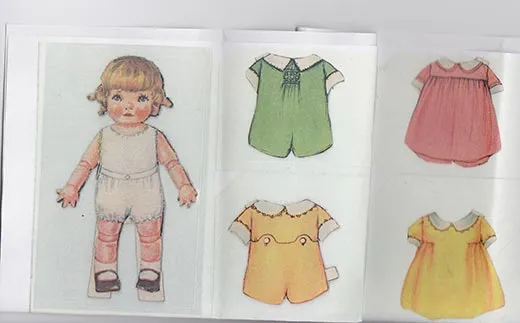
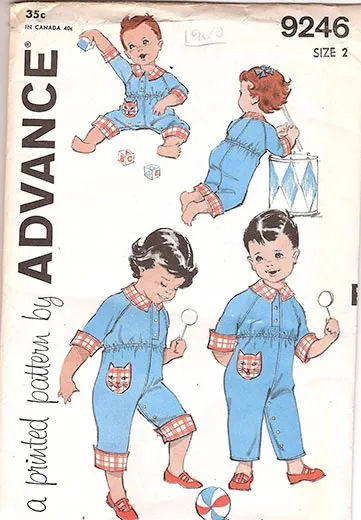
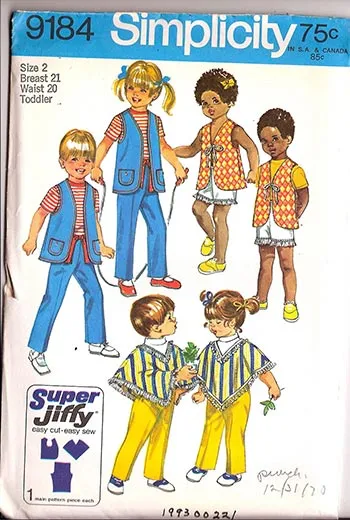

When the women'southward liberation move arrived in the mid-1960s, with its anti-feminine, anti-fashion message, the unisex look became the rage—but completely reversed from the time of immature Franklin Roosevelt. Now young girls were dressing in masculine—or at least unfeminine—styles, devoid of gender hints. Paoletti found that in the 1970s, the Sears, Roebuck catalog pictured no pink toddler clothing for ii years.
"One of the means [feminists] thought that girls were kind of lured into subservient roles every bit women is through wearable," says Paoletti. " 'If nosotros dress our girls more than similar boys and less like frilly trivial girls . . . they are going to accept more options and experience freer to be active.' "
John Money, a sexual identity researcher at Johns Hopkins Infirmary in Baltimore, argued that gender was primarily learned through social and ecology cues. "This was one of the drivers dorsum in the '70s of the argument that it'south 'nurture not nature,' " Paoletti says.
Gender-neutral wear remained pop until nearly 1985. Paoletti remembers that yr distinctly considering information technology was between the births of her children, a daughter in '82 and a male child in '86. "All of a sudden it wasn't just a blue overall; it was a blue overall with a teddy bear holding a football," she says. Dispensable diapers were manufactured in pink and blue.
Prenatal testing was a large reason for the change. Expectant parents learned the sex of their unborn infant and so went shopping for "daughter" or "boy" merchandise. ("The more you individualize article of clothing, the more you can sell," Paoletti says.) The pink fad spread from sleepers and crib sheets to large-ticket items such equally strollers, auto seats and riding toys. Flush parents could conceivably decorate for baby No. one, a daughter, and start all over when the next child was a boy.
Some young mothers who grew up in the 1980s deprived of pinks, lace, long hair and Barbies, Paoletti suggests, rejected the unisex look for their ain daughters. "Even if they are yet feminists, they are perceiving those things in a different calorie-free than the baby boomer feminists did," she says. "They call back even if they want their daughter to be a surgeon, there's nothing wrong if she is a very feminine surgeon."
Another important gene has been the rising of consumerism amongst children in recent decades. According to child development experts, children are but becoming conscious of their gender between ages 3 and 4, and they do non realize it'south permanent until age 6 or seven. At the same time, yet, they are the subjects of sophisticated and pervasive advertising that tends to reinforce social conventions. "So they think, for case, that what makes someone female is having long hair and a dress,'' says Paoletti. "They are so interested—and they are so adamant in their likes and dislikes."
In researching and writing her book, Paoletti says, she kept thinking about the parents of children who don't arrange to gender roles: Should they dress their children to adapt, or allow them to express themselves in their dress? "Ane thing I can say now is that I'm not real keen on the gender binary—the idea that you have very masculine and very feminine things. The loss of neutral clothing is something that people should think more nearly. And there is a growing demand for neutral clothing for babies and toddlers now, too."
"There is a whole community out at that place of parents and kids who are struggling with 'My son really doesn't want to wear boy clothes, prefers to wear girl clothes.' " She hopes i audience for her volume will exist people who written report gender clinically. The fashion earth may take divided children into pink and blueish, but in the world of real individuals, non all is black and white.
Correction: An before version of this story misattributed the 1918 quotation about pink and blue clothes to the Ladies' Home Periodical. It appeared in the June 1918 issue of Earnshaw's Infants' Department, a trade publication.
Source: https://www.smithsonianmag.com/arts-culture/when-did-girls-start-wearing-pink-1370097/
0 Response to "When a Red Head and a Black Girl Have a Baby"
Post a Comment